
With Project management tools at the forefront, this paragraph opens a window to an amazing start and intrigue, inviting readers to embark on a storytelling filled with unexpected twists and insights.
Exploring the realm of project management tools unveils a world of organization and streamlined processes, essential for successful project completion.
PROJECT MANAGEMENT
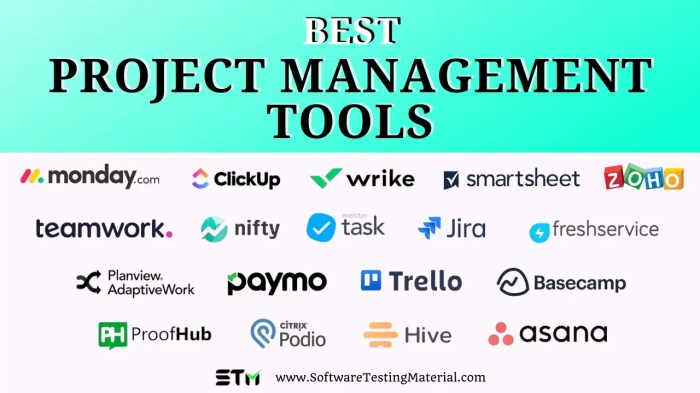
Project management is the process of planning, organizing, and overseeing the execution of a project from start to finish. It involves setting goals, managing resources, and ensuring that the project is completed within the constraints of time, budget, and scope.Key components of project management include defining the project scope, creating a project timeline, assigning tasks to team members, monitoring progress, and managing risks.
These components work together to ensure that the project is completed successfully and meets the desired objectives.Project managers play a crucial role in project management by leading and coordinating project teams. They are responsible for setting goals, allocating resources, communicating with stakeholders, and resolving any issues that may arise during the project lifecycle. Project managers also play a key role in ensuring that the project stays on track and meets its deadlines.Popular project management methodologies used in various industries include Agile, Scrum, Waterfall, and Kanban.
These methodologies provide frameworks and processes for managing projects effectively, allowing teams to adapt to changing requirements, collaborate efficiently, and deliver high-quality results.
Project Management Tools
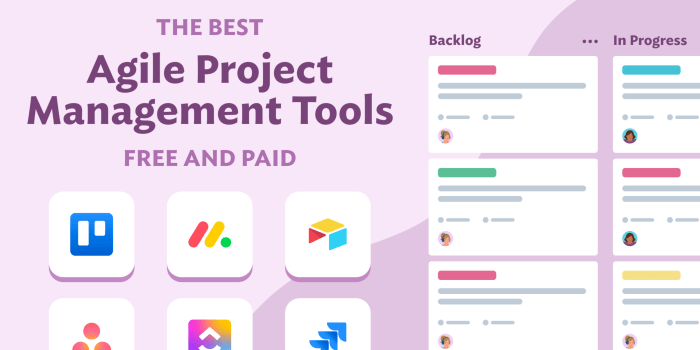
Project management tools play a crucial role in helping teams stay organized, collaborate effectively, and track progress towards project goals. There are several popular project management tools available in the market, each offering unique features and functionalities to meet the diverse needs of different teams.
Popular Project Management Tools
- Trello: Known for its user-friendly interface and Kanban-style boards, Trello is popular for visually organizing tasks and workflows.
- Asana: Offering a wide range of project management features, Asana is great for teams looking for task assignments, deadlines, and project timelines.
- Jira: Ideal for software development teams, Jira focuses on issue tracking, agile project management, and software development processes.
Comparison of Project Management Tools
When comparing project management tools, it’s essential to consider factors like ease of use, scalability, integrations, and pricing. While Trello is intuitive for beginners, Jira offers advanced customization options for complex projects. Asana falls in between, providing a balance of features for various team sizes and project types.
Benefits of Using Project Management Tools
- Organizing Tasks: Project management tools help in structuring tasks, setting priorities, and assigning responsibilities efficiently.
- Tracking Progress: By offering real-time updates and progress tracking, these tools ensure transparency and accountability within the team.
- Improving Collaboration: Features like file sharing, comments, and notifications enhance team collaboration and communication.
Streamlining Communication with Project Management Tools
Project management tools streamline communication among team members and stakeholders by centralizing project information, providing a platform for discussions, and offering real-time updates. With features like task comments, status updates, and shared dashboards, these tools ensure that everyone stays informed and connected throughout the project lifecycle.
Features and Capabilities
Project management tools are essential for effective project planning, providing a platform for teams to collaborate, track progress, and meet deadlines. These tools come with a range of features and capabilities that enhance project management efficiency and productivity.
Essential Features for Effective Project Planning:
- Task Management: Allows breaking down projects into tasks, assigning them to team members, and tracking their progress.
- Collaboration Tools: Facilitates communication among team members, file sharing, and real-time updates.
- Gantt Charts: Provides visual timelines to schedule tasks, set dependencies, and monitor project milestones.
- Budget Tracking: Helps in managing project expenses, tracking costs, and ensuring financial goals are met.
Advanced Features for Resource Allocation and Scheduling:
- Resource Management: Enables tracking of team members’ availability, skills, and workload for efficient resource allocation.
- Time Tracking: Allows monitoring of time spent on tasks, helping to improve project estimation and resource planning.
- Automated Scheduling: Offers tools for automatic task scheduling based on dependencies, resource availability, and project timelines.
Enhanced Capabilities through Integration:
- Integration with Communication Tools: Seamless integration with email, messaging apps, and video conferencing tools for better team collaboration.
- Integration with Accounting Software: Connects project management tools with accounting software for streamlined budget tracking and financial reporting.
- Integration with CRM Systems: Syncs project data with customer relationship management systems for improved client communication and project delivery.
Importance of Customizable Dashboards and Reporting Functionality:
- Custom Dashboards: Allow users to tailor project views, track KPIs, and prioritize tasks based on individual preferences.
- Reporting Tools: Generate detailed reports on project progress, budget variance, resource utilization, and other key metrics for informed decision-making.
- Real-time Analytics: Provide insights into project performance, bottlenecks, and areas for improvement through dynamic data visualization.
Implementation and Best Practices
Implementing a project management tool within an organization requires careful planning and execution to ensure successful adoption and utilization across teams. Training team members on how to effectively use these tools is crucial for maximizing productivity and optimizing workflows.
Steps for Implementing a Project Management Tool
- Identify the needs and requirements of the organization to select the most suitable project management tool.
- Set clear goals and objectives for implementing the tool to align with the organization’s strategic objectives.
- Allocate resources and budget for the implementation process, including training and support.
- Customize the tool to fit the organization’s workflow and processes for seamless integration.
- Train key stakeholders and team members on how to use the tool effectively and efficiently.
- Monitor progress and gather feedback to make necessary adjustments and improvements.
Best Practices for Training Team Members
- Provide hands-on training sessions with real-life examples and case studies to demonstrate the practical application of the tool.
- Offer continuous support and guidance to team members as they familiarize themselves with the tool.
- Create user guides and manuals for reference, as well as online tutorials for self-paced learning.
- Encourage collaboration and knowledge sharing among team members to enhance their skills and understanding of the tool.
Strategies for Successful Adoption and Utilization
- Communicate the benefits and advantages of using the project management tool to motivate team members to embrace the change.
- Lead by example by actively using the tool in your own work and demonstrating its effectiveness in achieving project goals.
- Encourage feedback and suggestions from team members to continuously improve the tool and address any challenges or issues.
- Celebrate successes and achievements resulting from the use of the tool to reinforce its value and importance within the organization.
Tips for Optimizing Workflows and Maximizing Productivity
- Establish clear processes and guidelines for using the project management tool to ensure consistency and efficiency.
- Automate repetitive tasks and create templates for common project activities to save time and effort.
- Use reporting and analytics features of the tool to track progress, identify bottlenecks, and make data-driven decisions.
- Regularly review and update project plans and schedules to adapt to changing requirements and priorities.
In conclusion, Project management tools serve as the backbone of efficient project execution, fostering teamwork, communication, and productivity in a seamless manner. Embrace the power of technology to elevate your project management endeavors to new heights.
FAQ Explained
How do project management tools enhance collaboration among team members?
Project management tools provide a centralized platform for team members to communicate, share updates, and collaborate on tasks in real-time, fostering a cohesive working environment.
What are some key features to look for in a project management tool?
Essential features include task organization, progress tracking, team allocation, and reporting capabilities. Advanced features may include Gantt charts, resource leveling, and integration with other software applications.
How can project management tools streamline communication with stakeholders?
By providing a transparent view of project progress, milestones, and deliverables, project management tools enable effective communication with stakeholders, ensuring alignment and timely decision-making.


