
Embark on a journey through the world of Scrum project management, where efficiency and success go hand in hand. This detailed guide offers insights and strategies to enhance your project management skills and achieve optimal results.
Overview of Scrum Project Management

Scrum project management is a popular agile framework used in software development projects. It emphasizes iterative and incremental development, allowing teams to deliver high-quality products efficiently. The core principles of Scrum include transparency, inspection, and adaptation, fostering collaboration and flexibility within the team.
Role of Scrum in Software Development Projects
Scrum plays a crucial role in software development projects by providing a structured approach to project management. It helps teams prioritize tasks, adapt to changes quickly, and continuously improve their processes. With regular feedback loops and sprints, Scrum enables teams to deliver working software incrementally, ensuring customer satisfaction and product quality.
Benefits of Using Scrum Methodology
- Increased Productivity: Scrum promotes a focused and collaborative work environment, leading to improved productivity and efficiency.
- Flexibility: The iterative nature of Scrum allows for changes to be incorporated easily, ensuring that the final product meets evolving requirements.
- Customer Satisfaction: By delivering incremental value in short iterations, Scrum ensures that customer feedback is incorporated, resulting in a product that aligns with customer needs.
- Improved Communication: Daily stand-up meetings, sprint planning sessions, and regular retrospectives enhance communication within the team, fostering transparency and collaboration.
- Adaptability: Scrum enables teams to adapt to changing market conditions and customer preferences, ensuring that the product remains relevant and competitive.
Scrum Roles and Responsibilities
In Scrum project management, there are three key roles that play a crucial part in the success of the project: the Product Owner, the Scrum Master, and the Development Team. Each role has specific responsibilities within the Scrum framework that contribute to the overall efficiency and effectiveness of the project.
Product Owner
The Product Owner is responsible for representing the voice of the customer and ensuring that the product backlog is prioritized based on business value. Their main responsibilities include:
- Defining and prioritizing the product backlog items
- Communicating project requirements to the development team
- Ensuring that the team delivers value to the customer
- Accepting or rejecting work results
Scrum Master
The Scrum Master acts as a facilitator for the Scrum team and ensures that the Scrum framework is followed. Their responsibilities include:
- Guiding the team on how to use Scrum practices
- Removing any impediments that hinder the team’s progress
- Organizing and facilitating Scrum events
- Helping the team improve their processes
Development Team
The Development Team consists of professionals who are responsible for delivering the product increment. Their responsibilities include:
- Collaborating with the Product Owner to define and deliver product increments
- Self-organizing to determine how best to accomplish the work
- Ensuring that the product backlog items are completed within the sprint
- Continuously improving their processes and practices
In contrast to traditional project management roles, Scrum roles are more focused on collaboration, self-organization, and iterative development. The Product Owner, Scrum Master, and Development Team work closely together to ensure that the project is delivered successfully and that the team continuously improves their processes. This collaborative approach sets Scrum apart from traditional project management methodologies and allows for greater adaptability and responsiveness to change.
Scrum Artifacts
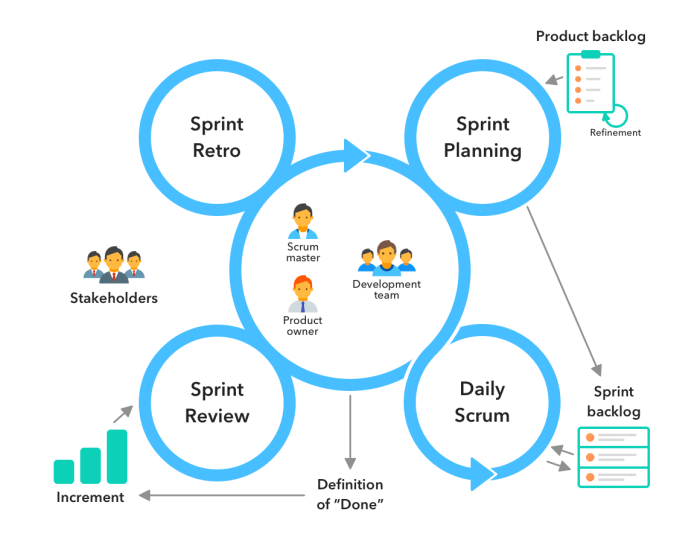
Scrum artifacts are essential elements in managing a Scrum project as they provide clarity, transparency, and visibility into the work being done. The main artifacts in Scrum include the Product Backlog, Sprint Backlog, and Increment.
Product Backlog
The Product Backlog is a prioritized list of all the features, enhancements, and bug fixes that need to be implemented in a product. It serves as the single source of truth for what needs to be done and is maintained and prioritized by the Product Owner. The Product Backlog evolves as new requirements emerge or existing ones change.
Sprint Backlog
The Sprint Backlog is a subset of items from the Product Backlog that the Development Team commits to completing within a Sprint. It contains the tasks necessary to deliver the Sprint Goal and is created during the Sprint Planning meeting. The Sprint Backlog is owned by the Development Team and is updated daily during the Daily Scrum.
Increment
The Increment is the sum of all the completed Product Backlog items at the end of a Sprint. It is a potentially shippable product increment that meets the Definition of Done. The Increment is reviewed at the Sprint Review meeting and provides stakeholders with a tangible output of the work done during the Sprint.
Scrum Events
In Scrum project management, there are several key events that play a crucial role in ensuring the success of the project. These events help teams collaborate effectively, stay on track, and continuously improve their processes.
Sprint
- The Sprint is a time-boxed iteration during which the team works to deliver a potentially shippable product increment.
- Objectives: To create a working product increment, gather feedback, and adapt to changes.
- Importance: Allows for incremental development, feedback loops, and continuous improvement.
Sprint Planning
- Sprint Planning is a collaborative meeting where the team plans the work to be done in the upcoming Sprint.
- Objectives: To set the Sprint goal, select User Stories, and create a Sprint backlog.
- Importance: Sets the direction for the Sprint, ensures alignment, and promotes transparency.
Daily Standup
- The Daily Standup is a short, daily meeting where team members discuss their progress, plans, and any impediments.
- Objectives: To synchronize activities, identify roadblocks, and promote team collaboration.
- Importance: Keeps the team aligned, fosters communication, and helps in problem-solving.
Sprint Review
- The Sprint Review is held at the end of the Sprint to demonstrate the completed work to stakeholders.
- Objectives: To gather feedback, review the product increment, and adapt the product backlog.
- Importance: Ensures transparency, validates work done, and facilitates feedback for improvement.
Sprint Retrospective
- The Sprint Retrospective is a meeting held after the Sprint Review to reflect on the Sprint and identify areas for improvement.
- Objectives: To review what went well, what could be improved, and create action items for the next Sprint.
- Importance: Encourages continuous improvement, fosters team collaboration, and enhances team morale.
Project Management Techniques
When it comes to project management techniques, Scrum offers a unique approach that integrates well with other methodologies, addresses risks and changes effectively, and promotes transparency, inspection, and adaptation throughout the project lifecycle.
Integration with Other Project Management Methodologies
Scrum can be easily integrated with other project management methodologies such as Kanban or Lean to create a hybrid approach that leverages the strengths of each methodology. By combining different practices, teams can tailor their project management processes to suit their specific needs and objectives.
Addressing Project Risks and Changes
- Scrum addresses project risks by promoting frequent inspection and adaptation through regular sprint reviews and retrospectives. This allows teams to identify and mitigate risks early on, reducing the chances of potential issues derailing the project.
- Furthermore, Scrum’s iterative and incremental approach enables teams to adapt to changes quickly and effectively. By breaking down the project into smaller increments, teams can respond to changes in requirements or priorities without causing significant disruptions.
Promoting Transparency, Inspection, and Adaptation
- Transparency is a core principle of Scrum, with all project stakeholders having visibility into the progress and challenges faced by the team. This fosters trust and collaboration, leading to better decision-making and outcomes.
- Regular inspection of the product and process during sprint reviews ensures that any deviations from the project goals are identified and addressed promptly. This continuous feedback loop allows for course corrections and improvements to be made throughout the project.
- Adaptation is ingrained in Scrum’s DNA, with teams encouraged to embrace change and continuously improve their processes. By leveraging feedback and insights gained from each sprint, teams can adapt and refine their approach to deliver better results.
In conclusion, Scrum project management stands as a beacon of efficiency and adaptability in the realm of project management. By embracing its principles and practices, teams can navigate complex projects with agility and achieve remarkable outcomes.
Questions Often Asked
What are the core principles of Scrum project management?
The core principles of Scrum project management include iterative development, self-organization, collaboration, and continuous improvement.
What are the key roles in Scrum project management?
The key roles in Scrum project management are the Product Owner, Scrum Master, and Development Team.
How does Scrum address project risks and changes during development?
Scrum addresses project risks and changes through regular inspections, adaptations, and a focus on delivering incremental value.


