
As Agile project management takes center stage, this opening passage beckons readers into a world crafted with good knowledge, ensuring a reading experience that is both absorbing and distinctly original.
Agile project management is a dynamic approach that revolutionizes traditional project management methods, emphasizing adaptability, collaboration, and iterative processes to achieve project success efficiently.
Agile Project Management
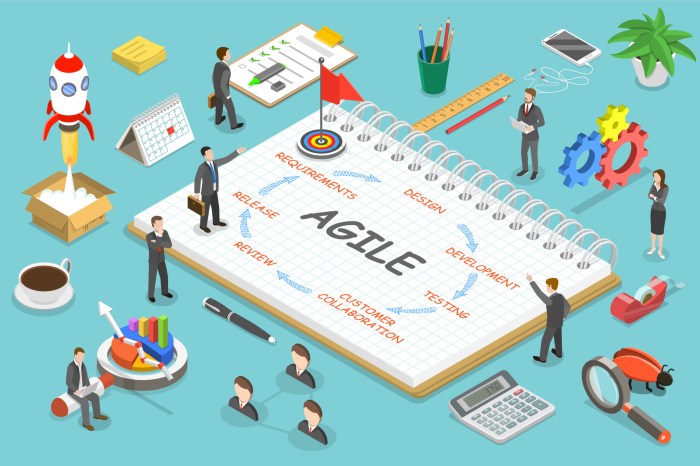
Agile project management is a flexible and iterative approach to managing projects that focuses on delivering small, incremental improvements in short time frames. It emphasizes collaboration, adaptability, and continuous feedback throughout the project lifecycle.
Key Principles of Agile Project Management
- Iterative Development: Projects are broken down into small increments with each increment delivering a specific feature or functionality.
- Collaboration: Cross-functional teams work together closely to achieve project goals and adapt to changes.
- Customer Involvement: Customers are involved throughout the project to provide feedback and ensure the final product meets their needs.
- Adaptability: Agile teams are able to respond to change quickly and adjust project priorities as needed.
- Continuous Improvement: Regular reflection and adaptation help teams improve processes and deliver better results.
Benefits of Agile Methodologies in Project Management
- Rapid Delivery: Agile allows for quicker delivery of product increments, leading to faster time-to-market.
- Flexibility: The ability to adapt to changing requirements and priorities enables teams to respond to feedback and deliver value.
- Improved Quality: Continuous testing and feedback loops help ensure a high-quality end product.
- Enhanced Collaboration: Agile promotes close collaboration among team members, stakeholders, and customers, leading to better communication and shared understanding.
Differences Between Agile and Traditional Project Management
- Approach: Agile uses an iterative and incremental approach, while traditional project management follows a linear, sequential plan.
- Flexibility: Agile is more adaptive and flexible to changes, whereas traditional project management tends to stick to a fixed plan.
- Customer Involvement: Agile involves customers throughout the project, while traditional project management may have limited customer interaction.
- Risk Management: Agile addresses risks continuously throughout the project, while traditional project management focuses on risk management at specific stages.
Agile Project Management Frameworks
Agile project management frameworks like Scrum, Kanban, and Extreme Programming (XP) are widely used in the industry to manage projects effectively by promoting flexibility, collaboration, and continuous improvement.
Scrum
Scrum is a popular agile framework that emphasizes iterative and incremental development. It divides the project into short iterations called sprints, usually lasting 2-4 weeks, where teams work on delivering a potentially shippable product increment.
- Key Features:
- Roles: Product Owner, Scrum Master, Development Team
- Artifacts: Product Backlog, Sprint Backlog, Increment
- Events: Daily Standup, Sprint Planning, Sprint Review, Sprint Retrospective
- Suitability:
- Ideal for projects with rapidly changing requirements
- Effective for cross-functional teams
Kanban
Kanban is a visual agile framework that focuses on continuous delivery and optimizing flow. It uses a Kanban board to visualize work, limit work in progress, and maximize efficiency by identifying bottlenecks in the process.
- Key Features:
- Visualization of work items on the Kanban board
- Limiting Work in Progress (WIP)
- Continuous improvement through feedback loops
- Suitability:
- Suitable for projects with predictable workflow
- Effective for teams aiming to improve efficiency continuously
Extreme Programming (XP)
Extreme Programming (XP) is an agile framework that focuses on software development practices to ensure high quality and responsiveness to changing customer requirements. It advocates programming in pairs, continuous integration, and test-driven development.
- Key Features:
- Pair programming
- Test-driven development (TDD)
- Continuous integration
- Suitability:
- Ideal for projects with complex and evolving requirements
- Effective for ensuring code quality and responsiveness
Agile Project Management Roles
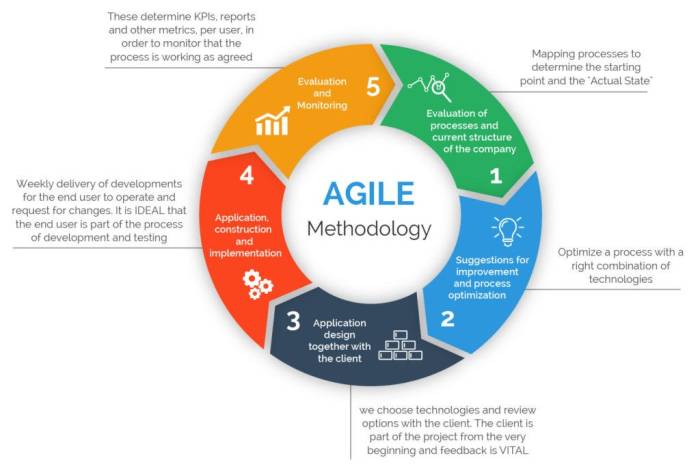
In Agile project management, there are key roles that play a crucial part in the success of projects. These roles include the Scrum Master, Product Owner, and Development Team. Each role has specific responsibilities that contribute to the overall efficiency and effectiveness of Agile projects.
Scrum Master
The Scrum Master is responsible for ensuring that the Scrum framework is followed effectively. They act as a facilitator for the team, helping to remove any obstacles that may hinder progress. The Scrum Master also guides the team in self-organization and encourages continuous improvement. Their main focus is on enabling the team to deliver high-quality work within the specified time frame.
Product Owner
The Product Owner is accountable for maximizing the value of the product and the work of the Development Team. They are responsible for creating and maintaining a product backlog, prioritizing tasks, and ensuring that the team is working on the most valuable features for the project. The Product Owner acts as the liaison between the stakeholders and the development team, making sure that the product meets the needs of the customers.
Development Team
The Development Team is responsible for delivering the product incrementally. They are self-organizing and cross-functional, meaning that they have all the skills necessary to complete the work. The team collaborates closely with the Product Owner to ensure that the product backlog items are completed as per the requirements. The Development Team is focused on delivering high-quality work and continuously improving their processes.Collaboration and communication among these Agile project management roles are essential for the success of the project.
By working together effectively, the Scrum Master, Product Owner, and Development Team can ensure that the project stays on track, meets stakeholder expectations, and delivers value to the customers.
Agile Project Management Tools
Agile project management tools play a crucial role in helping teams collaborate, plan, and track progress effectively. These tools are specifically designed to support agile practices such as sprint planning, backlog management, and burndown charts, enhancing team productivity and project visibility.
Common Agile Project Management Tools
- Jira: Jira is a popular tool developed by Atlassian that allows teams to plan, track, and release software. It offers features like customizable workflows, sprint planning, backlog management, and real-time collaboration.
- Trello: Trello is a visual collaboration tool that uses boards, lists, and cards to organize tasks and projects. It supports agile practices by enabling teams to create and prioritize tasks, track progress, and collaborate seamlessly.
- Asana: Asana is a versatile project management tool that helps teams streamline workflows, manage tasks, and track project progress. It offers features like task assignments, due dates, project timelines, and integrations with other tools.
PROJECT MANAGEMENT
Project management is the discipline of planning, organizing, and managing resources to bring about the successful completion of specific project goals and objectives. It involves balancing the core components of scope, time, cost, quality, risk, and resources to deliver projects within constraints.
Project Management Fundamentals
Project management fundamentals encompass the key components that drive the success of any project:
- Scope: Defines the work that needs to be accomplished to deliver a project successfully.
- Time: Sets the schedule for project activities and milestones.
- Cost: Manages the budget and financial resources allocated to the project.
- Quality: Ensures that project deliverables meet the required standards and expectations.
- Risk: Identifies and mitigates potential risks that could impact project outcomes.
- Resources: Allocates and manages human, financial, and material resources effectively.
Importance of Project Management
Project management plays a crucial role in delivering successful projects within constraints by:
- Ensuring clear project objectives and scope to guide project activities.
- Managing project resources efficiently to optimize performance and minimize waste.
- Monitoring project progress and performance to identify and address issues promptly.
- Facilitating effective communication and collaboration among project stakeholders.
Project Management Lifecycle
The project management lifecycle consists of several phases, each with key activities:
| Phase | Key Activities |
|---|---|
| Initiation | Define project goals, objectives, and scope. |
| Planning | Develop project plans, schedules, and budgets. |
| Execution | Implement project plans and manage project resources. |
| Monitoring and Controlling | Track project progress, monitor performance, and manage changes. |
| Closure | Conclude project activities, deliver final products, and obtain project acceptance. |
In conclusion, Agile project management offers a modern framework that empowers teams to navigate complex projects effectively, fostering innovation, flexibility, and continuous improvement throughout the project lifecycle.
Key Questions Answered
What are the key principles of agile project management?
Agile project management principles include customer collaboration, responding to change, iterative development, and delivering working solutions frequently.
How do agile project management frameworks like Scrum and Kanban differ?
Scrum follows a more structured approach with fixed-length iterations, while Kanban focuses on continuous delivery without predefined timeboxes.
What are some common tools used in agile project management?
Popular tools include Jira, Trello, and Asana, which support features like sprint planning, backlog management, and visual progress tracking.


