Exploring the world of Project management methodologies, this introduction captivates readers with a detailed yet intriguing narrative that sets the stage for a deeper dive into this essential business topic.
The following paragraph will provide more insights and detailed information on the subject.
PROJECT MANAGEMENT
Project management is the practice of planning, executing, controlling, and closing the work of a team to achieve specific goals and meet specific success criteria within a specified time frame. It is essential in business as it helps organizations effectively manage resources, time, and budget to ensure projects are completed successfully.
Key Components of Project Management
- Project Initiation: Defining the project, setting goals, and determining feasibility.
- Project Planning: Creating a roadmap, setting timelines, and allocating resources.
- Project Execution: Implementing the plan and coordinating team members to achieve project goals.
- Project Monitoring and Controlling: Tracking progress, managing risks, and making necessary adjustments.
- Project Closure: Formalizing acceptance of the project deliverables and completing administrative tasks.
Examples of Successful Project Management
- Construction of the Burj Khalifa: The successful completion of the world’s tallest building in Dubai involved meticulous project management to coordinate various teams and resources.
- Launching the iPhone: Apple’s successful product launches, like the iPhone, are a result of effective project management in terms of planning, execution, and quality control.
- Olympic Games: Organizing a global event like the Olympic Games requires precise project management to ensure the venues, logistics, and schedules are all coordinated seamlessly.
PROJECT MANAGEMENT METHODOLOGIES

Project management methodologies refer to the strategies and techniques used to plan, execute, monitor, and control projects effectively. These methodologies provide a structured approach to managing projects, ensuring that they are completed on time, within budget, and meet the desired objectives.
Traditional vs. Agile Project Management Approaches
Traditional project management follows a linear and sequential approach, where the project is planned in detail at the beginning, and any changes are difficult to implement once the project starts. On the other hand, agile project management is iterative and flexible, allowing for changes to be made throughout the project based on feedback and evolving requirements.
- Traditional project management focuses on detailed planning and documentation upfront, while agile project management emphasizes collaboration, adaptability, and delivering value in short iterations.
- Traditional project management is best suited for projects with well-defined requirements and stable scope, while agile project management is ideal for projects with changing or unclear requirements.
- Traditional project management follows a rigid structure with a focus on processes and documentation, while agile project management values individuals and interactions over processes and tools.
Importance of Selecting the Right Methodology for a Project
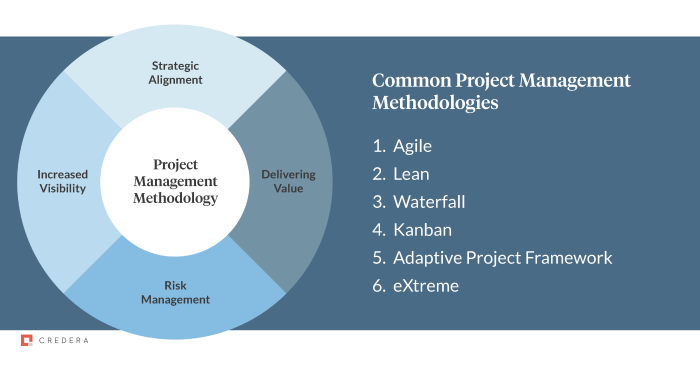
Choosing the right methodology for a project is crucial for its success. The selected methodology should align with the project’s goals, scope, team dynamics, and external factors such as industry standards and client requirements.
- Using the wrong methodology can lead to project delays, cost overruns, quality issues, and stakeholder dissatisfaction.
- Each project is unique, and the methodology should be selected based on factors such as project complexity, team expertise, customer involvement, and risk tolerance.
- By selecting the appropriate methodology, project managers can optimize resource utilization, enhance team collaboration, improve project visibility, and increase the likelihood of project success.
WATERFALL METHODOLOGY
The waterfall methodology is a traditional approach to project management where each phase must be completed before moving on to the next. It follows a linear and sequential process, making it easier to understand and manage for many project teams.
Sequential Phases of the Waterfall Methodology
- Requirements Gathering: In this phase, the project requirements are gathered and documented.
- Design: Once the requirements are clear, the design phase involves creating a detailed design plan.
- Implementation: The actual implementation of the project takes place in this phase.
- Testing: After implementation, the project is thoroughly tested to ensure it meets the requirements.
- Deployment: The final product is deployed to users or customers in this phase.
- Maintenance: Ongoing maintenance and support are provided post-deployment.
Advantages and Disadvantages of Using the Waterfall Methodology
- Advantages:
- Clear project objectives and requirements from the start.
- Easy to understand and manage due to its linear nature.
- Well-suited for projects with stable requirements.
- Disadvantages:
- No room for changes once a phase is completed.
- Difficult to go back to a previous phase if needed.
- May lead to delays if requirements are not well-defined initially.
AGILE METHODOLOGY
Agile methodology is a project management approach based on the idea of breaking down tasks into smaller chunks and completing them in short iterations. This method emphasizes adaptability, collaboration, and continuous improvement throughout the project lifecycle.
Principles of Agile Methodology
- Customer collaboration over contract negotiation
- Responding to change over following a plan
- Individuals and interactions over processes and tools
- Working software over comprehensive documentation
Iterative and Incremental Nature of Agile Project Management
Agile project management involves breaking down the project into smaller iterations or sprints, each delivering a potentially shippable product increment. This iterative approach allows for flexibility and enables teams to adapt to changes quickly based on feedback received during each iteration.
Examples of Industries Using Agile Methodology
- Software Development: Agile is widely used in software development projects due to its ability to accommodate changing requirements and prioritize customer feedback.
- Marketing: Agile methodologies are increasingly being adopted in marketing campaigns to improve responsiveness and deliver results in a timely manner.
- Manufacturing: Some manufacturing industries have embraced Agile practices to enhance product development processes and increase efficiency.
SCRUM
Scrum is a project management framework that emphasizes iterative and incremental progress to deliver high-value products efficiently.
Roles and Responsibilities within a Scrum Team
In a Scrum team, there are three key roles:
- Product Owner: Responsible for defining and prioritizing the product backlog, ensuring that the team works on the most valuable features.
- Scrum Master: Facilitates the Scrum process, removes obstacles, and ensures the team adheres to Scrum practices.
- Development Team: Self-organizing team members who are responsible for delivering the product increment.
Scrum Ceremonies and Their Significance
Scrum ceremonies are essential meetings that help the team collaborate, inspect and adapt throughout the project:
- Sprint Planning: At the beginning of each sprint, the team plans the work to be done and commits to delivering a potentially shippable product increment.
- Daily Standup: A short daily meeting where team members discuss what they did yesterday, what they plan to do today, and any obstacles they are facing.
- Sprint Review: Held at the end of each sprint, the team demonstrates the completed work to stakeholders and gathers feedback for future iterations.
- Sprint Retrospective: A meeting at the end of each sprint where the team reflects on their processes and identifies areas for improvement in the next sprint.
Conclusively, Project management methodologies play a pivotal role in ensuring successful project outcomes, and selecting the appropriate approach is key to achieving project goals efficiently and effectively.
User Queries
What are the key components of project management?
The key components include scope, time, cost, quality, communication, risk, and procurement management.
How do you choose the right methodology for a project?
Consider factors like project scope, team size, timeline, and flexibility requirements to select the most suitable methodology.
What are the sequential phases in the waterfall methodology?
The phases are requirements, design, implementation, testing, deployment, and maintenance.
What industries commonly use agile methodology?
Software development, IT, marketing, and manufacturing are some industries where agile methodology is commonly applied.